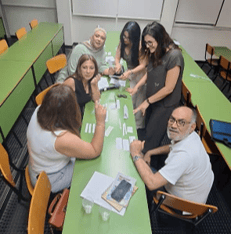
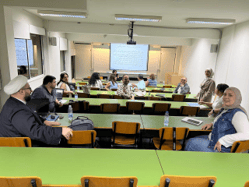
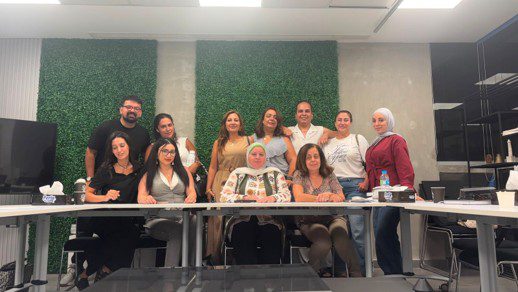
Supported by NCCMR, Adyan Foundation and the Institute of Muslim-Christian Studies at Saint Joseph University of Beirut partnered to deliver the 2025–2026 Diploma in Religions and Human Rights. The initiative was created in response to a need in Lebanon: conversations about religion and human rights often remain separated across academic, legal, and faith-based settings. The diploma brought these perspectives together in a shared learning environment designed to encourage discussion, reflection, and practical action.
The program combined ten thematic modules with research and project-development components. Participants explored the foundations of human rights and religion, interpretation of religious texts, political systems, freedom of religion or belief, religious institutions, family and child rights, civic space, minority rights, environmental responsibility, and artificial intelligence. Lectures were complemented by case studies, group work, guided readings, assignments, and the development of initiatives for multireligious communities.
Evaluation findings point to learning and practical impact. All 13 survey respondents reported gains in core human-rights knowledge, understanding of the relationship between religion and human rights, multi-perspective analysis, and the ability to connect theory with practice. Ninety-two percent rated their overall experience four or five out of five, and the same proportion said they would definitely recommend the diploma. Importantly, 12 of 13 respondents had already applied their learning fully or to some extent in academic research, journalism, professional training, program design, community conversations, and environmental project preparation.
Participants valued the diversity of perspectives and the respectful learning environment. One participant described becoming more confident discussing religion and more respectful of different faith traditions. Another reported using the diploma’s learning in professional training on human rights and freedom of belief. These examples show how the program moved beyond classroom learning toward practical application in participants’ professional and community contexts.
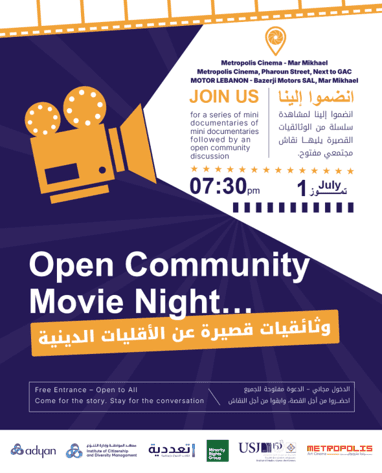
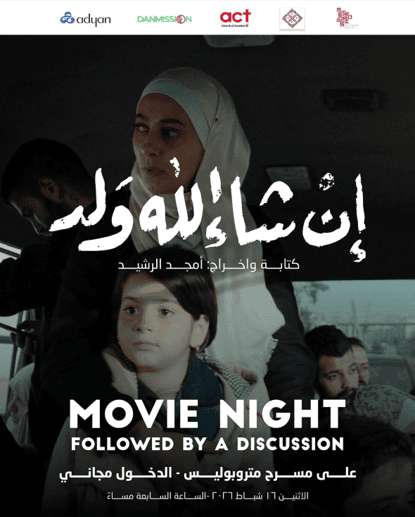
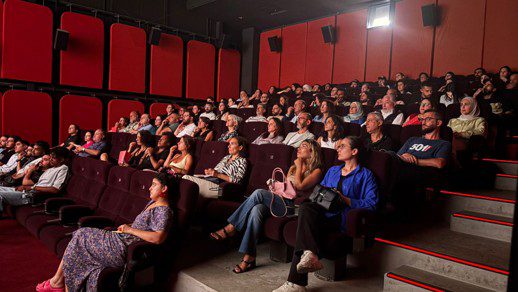
The initiative also extended dialogue beyond the diploma through public film screenings at Metropolis Cinema in Beirut, creating opportunities for audiences to engage with religious diversity, minority experiences, dignity, and coexistence. Together, the academic program and public activities demonstrate the value of sustained collaboration between universities and civil-society organizations in building informed, respectful, and practical engagement with religion and human rights in Lebanon.
By linking academic study with project design and public conversation, the partnership created a platform that can continue beyond a single grant cycle. The evaluation identifies priorities for future editions: more field exposure, case studies, practical exercises, and refreshed content.