From June to September 2026, the Centre for Christian-Muslim Understanding and Partnership (CCMUP), working with the Egyptian Family House, the International Public Schools Unit at the Ministry of Education, and the Network of Centers for Christian-Muslim Relations (NCCMR), implemented three Journeys of Peace for 90 Muslim and Christian students from three schools. The initiative used direct encounters with religious communities and Egypt’s shared heritage to strengthen mutual understanding, respect, and a common sense of citizenship.
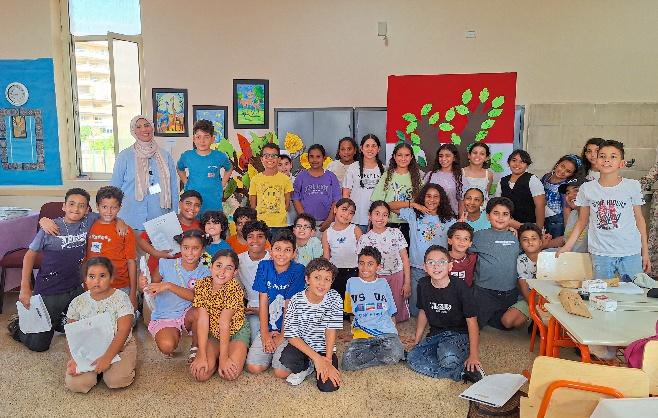
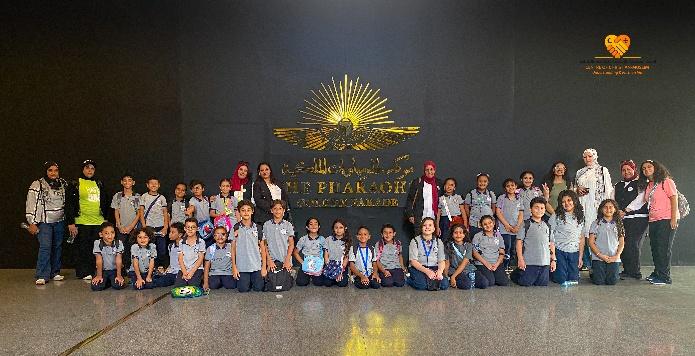
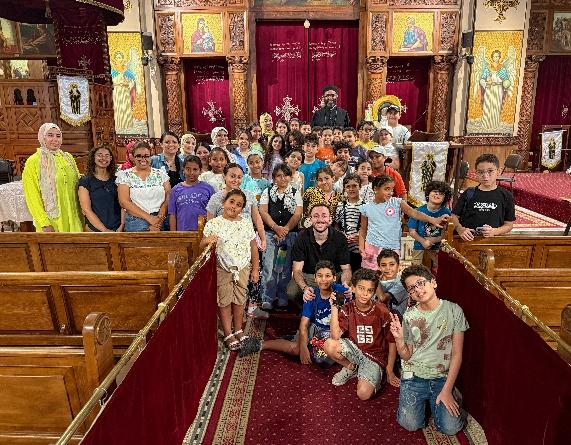
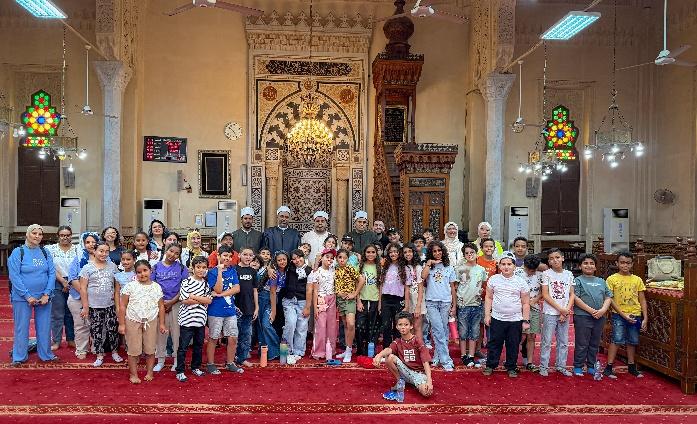
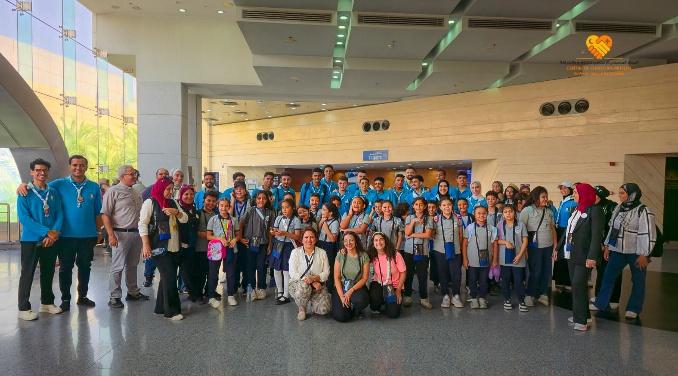
The first journey, on 30 June, brought together 36 students. They visited Al-Thawra Mosque in Heliopolis, where Sheikh Safwat Abdel Hamid introduced the mosque and spoke about mercy, tolerance, and respect in Islam. At St. Mark’s Coptic Orthodox Church, Father Samuel Sanad explained the church and the Christian faith; for many students, it was their first time inside a church. The day continued at the National Museum of Egyptian Civilization and ended with drawings and written reflections that formed a “Tree of Peace.”
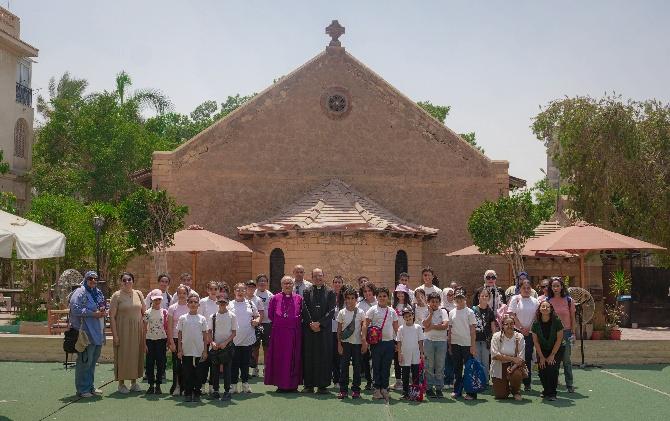
On 5 August, 28 students from IPS Mustafa El Nahas followed a similar route. After meeting the Sheikh at Al-Thawra Mosque, they visited St. Michael and All Angels’ Church, where Archdeacon Emad Basilious introduced the church’s history and Christian faith. Their museum visit again connected religious diversity with Egypt’s wider cultural story, while individual drawings and reflections captured what had affected them most.
The third journey, on 2 September, brought 26 Muslim and Christian elementary students from IPS Rod El Farag to Al-Thawra Mosque, St. Cyril’s Catholic Church, and the National Museum of Egyptian Civilization. Father Rafic Greiche welcomed the group at the church, and students once again had space to ask questions, encounter another tradition directly, and express their learning creatively at the end of the day.
Across all three journeys, the same educational pattern proved valuable: children entered religious spaces, met faith leaders, asked candid questions, shared the day with peers from another faith, and placed these experiences within a shared Egyptian history. Teachers welcomed the initiative, emphasizing its potential to broaden children’s understanding before misconceptions develop into division, hatred, or violence, and teachers expressed interest in future collaboration.
Journeys of Peace showed how simple, carefully guided encounters can make interfaith understanding concrete and memorable. By helping children discover both religious difference and a common national heritage, the project offered a practical model for nurturing a generation that sees diversity as part of Egyptian identity and peaceful citizenship.