Tuesday, 3rd of March, 2026, 13:00 GMT
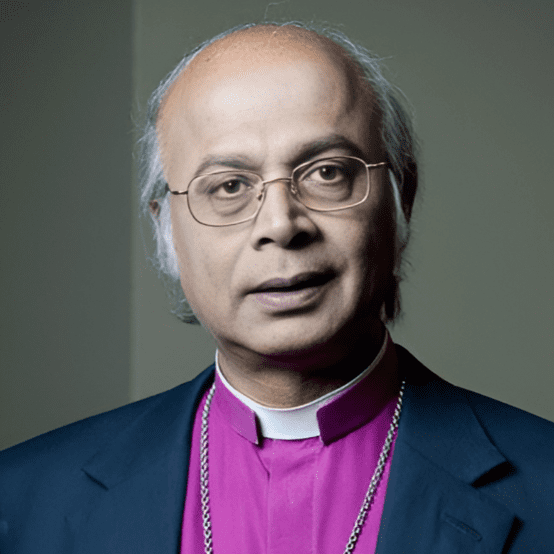
Prof. Michael Nazir-Ali was the 106th Bishop of Rochester, for 15 years, until September 2009. He is originally from Southwest Asia and was the first Diocesan Bishop in the Church of England born abroad, appointed in 1994. Before that he was the General Secretary of Church Mission Society from 1989-1994 and prior to holding this position was Bishop of Raiwind in Pakistan. He is now a Priest of the Ordinariate of Our Lady of Walshingham. He holds both British and Pakistani citizenship and from 1999 was a member of the House of Lords where he was active in a number of areas of national and international concern. He has both a Christian and a Muslim family background and is now President of the Oxford Centre for Training, Research, Advocacy and Dialogue (OXTRAD).
This lecture will seek to describe the role of religion in society both in terms of cohesion, where it can provide a spiritual and moral ‘glue’ for a particular society and its ‘prophetic’ aspect, where it can challenge the state of society and the direction it, or some elements in it, may be taking. It will then consider how religion can go wrong and fuel conflict between religious and ethnic groups within nations or between nations. Examples will be given from the Middle Ages, early modern Europe and contemporary nationalisms in Asia and Europe. Religion can also be a powerful force for making and maintaining peace between groups and nations. This can arise directly from religious conviction or it can be the result of patient dialogue between representatives of religious traditions as to how their tradition encourages, or even requires, them to work for peace whether locally, nationally or internationally. Particular attention will be given to the ‘Abrahamic’ faiths because of their global reach and because they are a factor in conflict, as well as in peacemaking, in so many parts of the world. There will also be discussion of the accountability of religious traditions in the context of inter religious dialogue, in the media and in the public square, regarding their role in promoting fundamental freedoms, good stewardship of the natural world, working to bring conflict to an end and promoting peace and collaboration among diverse ethnic, religious and socio-economic groups.